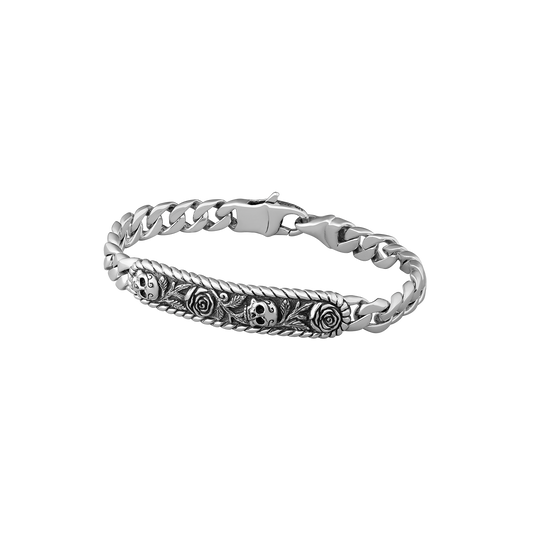
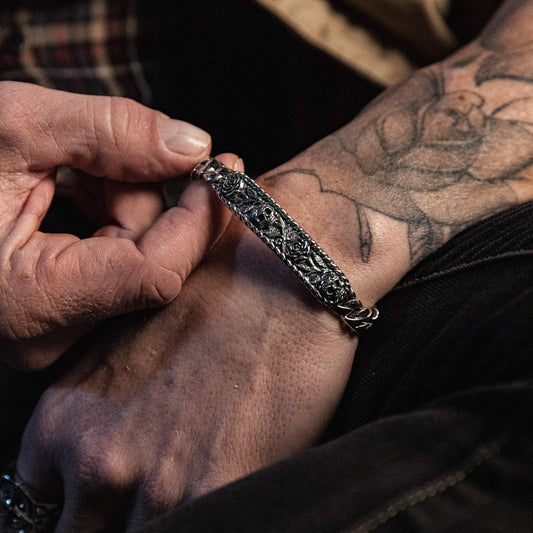
A wedding band sits on your hand every day for the rest of your life, through work, workouts, and everything in between. That's a different kind of commitment than most jewelry ever asks for, and it's worth choosing with the same care.
This guide walks through the main band types, how width affects comfort and fit, how to pair a band with an existing engagement ring, and what to consider for both men's and women's wedding rings.

Types of Wedding Bands
Most wedding bands fall into a handful of core styles, each with its own character and upkeep.
Classic bands keep a plain, rounded or flat profile with no stones or engraving. They pair with nearly anything and hold up well over decades of wear.
Comfort-fit bands curve slightly on the inside, making them easier to slide on and off and more comfortable for daily wear, particularly for anyone unused to wearing rings.
Eternity bands carry stones set continuously around the entire band. They work well as a wedding band alone or stacked with an engagement ring.
Half-eternity bands set stones across the top half only, offering a similar look with a lower price point and reduced risk of stone damage, since the underside stays plain metal.
Textured or engraved bands bring in hammered finishes, milgrain detailing, or personal engraving, giving an otherwise simple shape more character.
Two-tone bands combine metals, such as sterling silver with gold plating, for contrast without needing a stone at all.
The right type depends less on trend and more on how the ring fits into daily life. A band worn constantly benefits from a design that ages well and holds up under regular contact with tools, water, and fabric.
How to Choose the Right Wedding Band Width
Width changes how a band feels and looks more than almost any other factor.
Narrow bands, generally under 4mm, sit closer to the finger and work well stacked with an engagement ring, since the two pieces stay proportional to each other. Wider bands, from 6mm up, stand well on their own and tend to suit larger hands or those wanting the ring to read as a clear statement piece.
Finger size plays a role too. A wider band on a smaller finger can feel disproportionate, while a narrow band on a larger hand can look thin. Trying on a few widths side by side, in person, makes the difference clearer than any general rule.
Comfort also shifts with width. A wider band contacts more skin, which some people find warmer or more noticeable through the day. If you're unsure, a mid-range width between 4mm and 6mm offers a practical starting point that works for most hand sizes and lifestyles.

How to Choose a Wedding Band to Match Your Engagement Ring
For anyone wearing both rings together, how they sit side by side matters as much as how each looks alone.
Matching metals keeps the pairing seamless. A sterling silver engagement ring generally pairs best with a sterling silver band, since mixed metals can look unintentional rather than deliberate, unless the mixing itself is the design choice.
Consider the engagement ring's profile before choosing a band shape. A rounded stone setting often pairs better with a slightly curved band, while an angular or geometric setting can suit a flatter profile.
Curved or contoured wedding bands are built specifically to fit against certain engagement ring shapes, sitting flush against the curve of the setting rather than leaving a gap. If the engagement ring has a raised setting, checking that the wedding band sits comfortably beside it before purchasing saves a return trip later.
Some people choose not to match the two rings at all, wearing the engagement ring alone most days and adding the band only for the wedding itself, or wearing both on different hands. There's no single correct approach. What matters is how the pairing looks and feels on your own hand.
How to Choose a Men's Wedding Band
Men's wedding bands lean toward simpler profiles, though the range of options has grown considerably beyond the plain classic band.
Sterling silver and stainless steel both hold up well to daily wear, resisting scratches and everyday impact better than softer metals. Wider bands, typically 6mm to 8mm, tend to suit the proportions of larger hands, though this comes down to personal preference rather than a fixed rule.
Textured finishes, such as hammered or brushed metal, hide small scratches better than a highly polished surface, which matters for a ring worn during manual work or regular gym use. Engraved detailing, a personal date, or a custom design adds character without moving away from a design built for daily wear.
Comfort-fit interiors are worth prioritising for men's bands specifically, since they tend to see more removal and replacement throughout the day, for work gloves, gym sessions, or manual tasks.

How to Choose a Wedding Ring for a Woman
Women's wedding bands often need to work alongside an engagement ring, which shapes many of the decisions around shape, width, and metal.
Slimmer profiles, generally under 4mm, pair naturally with most engagement ring settings and sit close to the hand without adding bulk. Contoured or curved bands solve the gap issue that can appear when a rounded engagement ring setting meets a straight-edged band.
Eternity and half-eternity styles work well for anyone wanting extra sparkle without needing a separate engagement ring for the effect. For daily wear, half-eternity designs offer more practical durability, since the plain underside resists wear better than a fully stone-set band.
Metal choice matters as much here as with men's bands. Sterling silver offers a cooler tone that pairs naturally with white gold or platinum-look engagement rings, while a two-tone band can bridge a mixed-metal engagement ring more naturally than a single-tone piece.

Final Tips on Choosing a Wedding Band
A few things help before making a final decision:
- Try on multiple widths and profiles in person if possible. Photos and product listings rarely capture how a ring feels on your actual hand.
- Consider your daily routine. Manual work, gym sessions, and frequent hand-washing all affect how a band holds up over time.
- Think beyond the wedding day. A band worn for decades benefits more from comfort and durability than from trend-driven detailing.
- If pairing with an engagement ring, bring it along when trying on bands, or at least have exact measurements on hand.
- Budget for potential resizing, since finger size can shift slightly over time.
The right wedding band isn't necessarily the most detailed or expensive option. It's the one that still feels right after years of wear, through every day it sits on your hand.