The February birthstone doesn't announce itself. It pulls you in.
Deep violet. Cool and composed. Amethyst carries a considered presence that isn’t showy. For centuries, it has been associated with clarity of mind, inner calm, and the kind of conviction that doesn't waver under pressure. It's a stone worn with intention, not impulse.
If you've ever asked what the birthstone for February is, the answer is amethyst, a purple variety of quartz. One of the most historically significant gemstones in the world, the story of amethyst runs deeper than colour.
This guide covers the February birthstone meaning, its origins, colour variations, how to care for it, and why amethyst continues to hold its ground as one of the most enduring stones in jewelry.

Amethyst Birthstone
The birthstone for February is amethyst, a violet quartz that has held its place for centuries without needing reinvention. It carries colour without screaming. That’s part of its appeal. Amethyst has a presence, but it doesn’t beg for attention.
Within the birthstone month of February, amethyst holds its ground without announcement. The stone carries weight, colour, and history. It shifts tone against silver in different light. Amethyst doesn't decorate a piece so much as change the atmosphere around it. Thus, it is a stone for people who know that character rarely needs to raise its voice.
Amethyst Birthstone Meaning & History
The February birthstone meaning has long been tied to clarity, restraint, and self-possession. Ancient cultures believed amethyst could steady the mind. That symbolism held because it made sense. The stone itself feels measured. There’s depth to it, but no chaos.
Historically, amethyst carried serious symbolic weight. Ancient Greeks believed it guarded against intoxication. The word amethyst itself comes from the Greek amethystos, meaning "not drunk" or "sober." Goblets were carved from it. Warriors carried it. Clergy wore it as a symbol of spiritual clarity and moral grounding, not because it looked expensive, but because it suggested control. That idea still lands today. The February gemstone birthstone doesn’t appear ornamental in the usual sense, rather it appears like a natural representation of one’s lucidity.
That’s what gives amethyst its staying power. It reflects a certain way of moving through the world. Calm without softness. Strength without noise. The kind of stone someone chooses says something about how they carry themselves; it doesn’t just fill a gap in a collection.
Where Is Amethyst Found?
Amethyst forms inside volcanic rock cavities, often in geodes where silica-rich fluids cool slowly over time. The purple colour comes from iron impurities and natural irradiation during the stone's formation, a process that takes place over millions of years.
Each region produces slightly different tonal profiles. Brazilian stones tend toward lighter violets. Zambian amethyst runs darker and more saturated, often with a reddish secondary hue. Russian amethyst, though rare, is considered among the most refined. Uruguayan stones are often darker, more saturated, with a denser violet that feels heavier in the hand and in the eye.
That geological origin, slow formation under volcanic pressure, gives the stone an earned character. Some pieces feel sharper, cleaner, more immediate. Others carry a darker pull that settles in slowly. That variation is part of what gives the February birthstone amethyst its range. It can lean refined, it can lean shadowed, but it always keeps its character.

Amethyst Birthstone Colour & Varieties
When people ask what colour the February birthstone is, the immediate answer is purple. The fuller answer is more nuanced than that.
Amethyst spans a wide tonal range within the violet and purple family, from pale lavender to deep, near-blackish purple. The most prized specimens carry a rich, saturated violet with reddish secondary tones, known in the trade as "Deep Siberian."
Common amethyst colour profiles include: Pale Lavender (light and cool, more translucent), Medium Violet (the most recognized commercial tone), Deep Purple (saturated, absorbs light rather than reflecting it), and Reddish-Purple (strong secondary red tone, highly valued).
There are also two notable variety crossovers worth knowing. Ametrine is a natural combination of amethyst and citrine within a single crystal, producing zones of purple and yellow-orange. Prasiolite, sometimes called green amethyst, is a heat-treated variety that shifts the stone to a pale yellow-green.
For jewelry, the deep violet range pairs most naturally with sterling silver and oxidized metal finishes. The contrast is direct. The stone's density holds against darker metalwork without either element competing for attention.
What matters most is not the label. It’s the way the stone holds colour under wear and light. A strong amethyst doesn’t flatten out; it carries dimension. That’s what makes it work so well in February birthstone jewellery. It catches attention without becoming theatrical.
Amethyst Birthstone Care & Cleaning
Amethyst's hardness makes it a practical choice for everyday wear, but the stone is sensitive to prolonged heat and direct sunlight. Extended UV exposure can gradually fade its colour over time, particularly in lighter stones.
Care is straightforward. Clean amethyst with warm water and mild soap, using a soft brush to work around the setting. Avoid ultrasonic cleaners, particularly for stones with inclusions. Store separately from harder gemstones to prevent scratching. Keep away from prolonged direct sunlight and avoid steam cleaning.
Sterling silver settings should be polished occasionally to maintain the contrast against the stone's depth. Avoid exposure to harsh chemicals, including household cleaners, which can dull both the stone and the metal over time.
With consistent care, the February birthstone jewelry holds its character for decades. The stone doesn't diminish with age; it settles into itself.

Amethyst Jewelry: Rings, Necklaces & Gifts
Amethyst works because it knows how to hold its place.
February Birthstone Ring
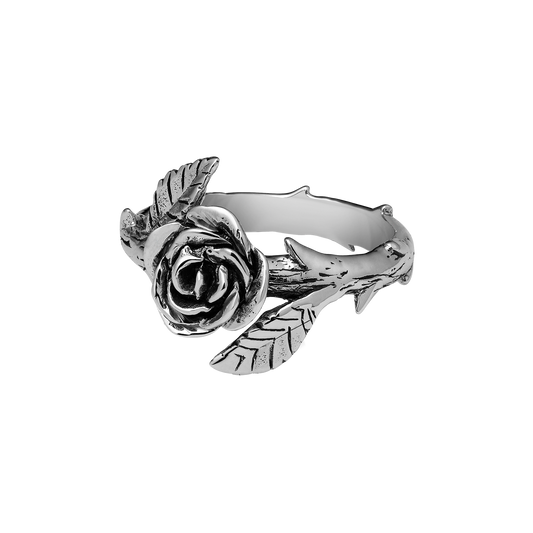
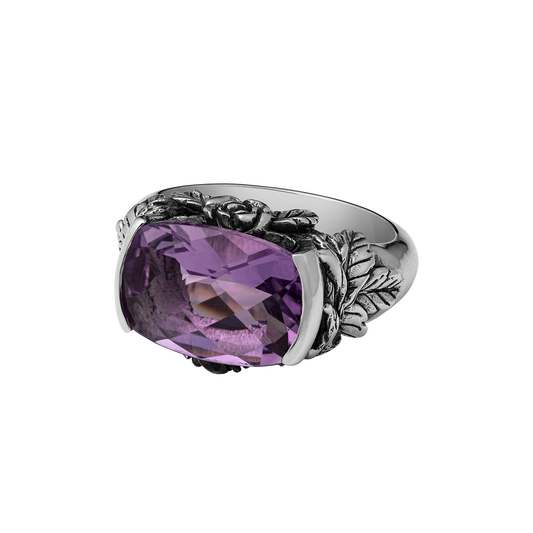
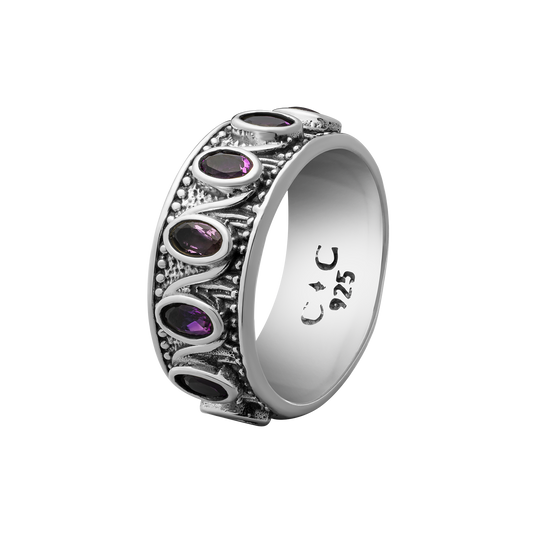
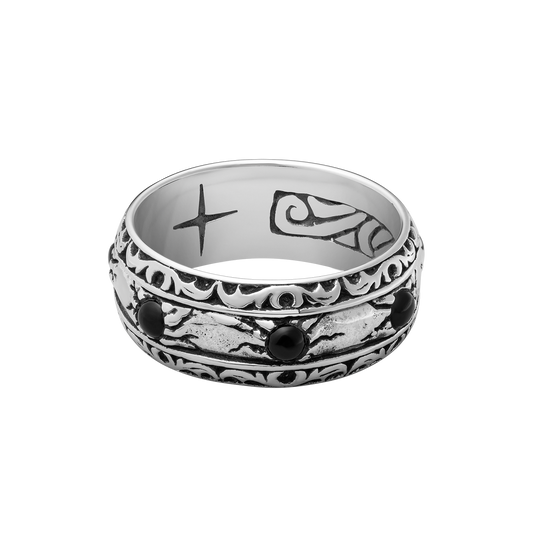
A February birthstone amethyst ring gives the stone structure. It catches movement. It becomes part of the hand, part of the gesture, part of the habit. In sterling silver, amethyst takes on a colder edge. It enhances the cooler purple tones of amethyst. Oxidized details increase depth and contrast. The contrast sharpens both materials, and the combination makes an unabashed statement.
February Birthstone Necklace
A February amethyst birthstone necklace sits differently. Closer to the body. More constant. Less visible from a distance, more personal up close. It becomes part of someone’s daily rhythm rather than a piece they think about every time they put it on.
Pendant formats work particularly well with amethyst, allowing the stone to sit as a focal point without needing additional weight around it. Layered chain styles can work when the metal weight stays consistent throughout.
February Birthstone Bracelet
A February birthstone bracelet or pair of February birthstone earrings brings the stone into smaller moments. A flash at the wrist. A hit of colour near the face. Less central, but no less deliberate.
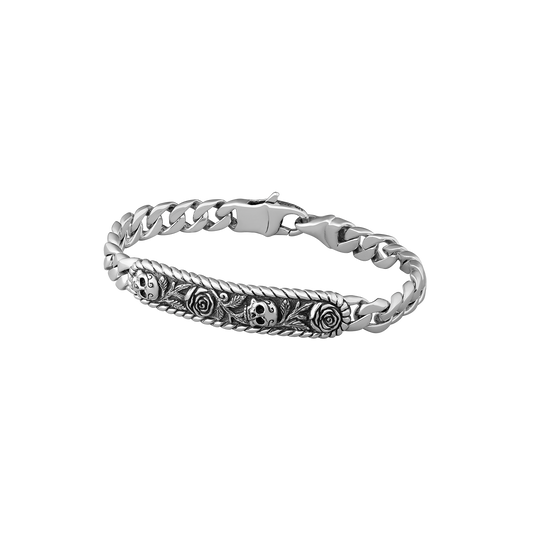
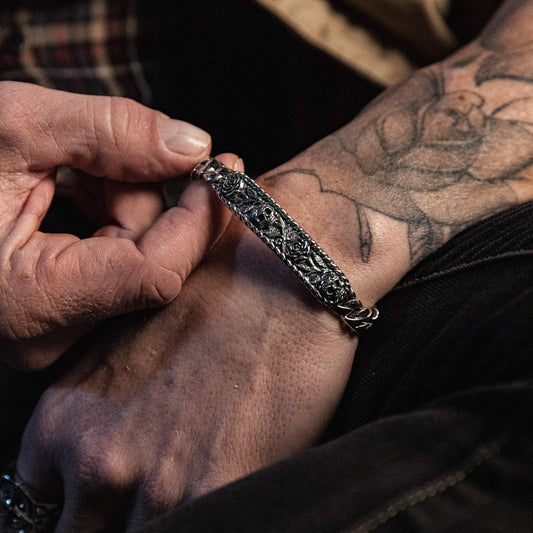
An amethyst birthstone bracelet pairs the stone with wrist-worn metalwork. Beaded formats incorporate smaller stones as accents. Cuff and link designs can feature a single amethyst as a structural focal point. The stone's violet holds well against matte and brushed metal finishes.
The best February amethyst birthstone jewellery doesn’t feel like a special-occasion gesture. It feels like something that should have already been there.

Ways to Wear Your February Birthstone
The easiest way to wear amethyst is to let it do what it already does well. Hold colour. Hold depth. Hold attention without forcing it.
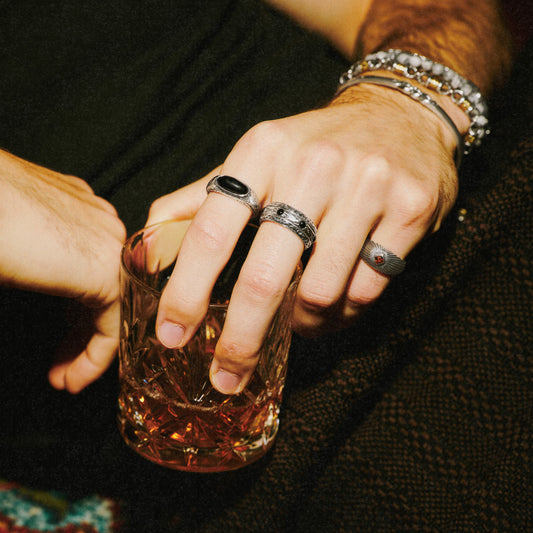
A ring makes the strongest case for it. It keeps the stone visible and puts it into motion every time the hand moves. A pendant carries the same symbolism in a quieter way. A chain with an amethyst sits closer, more private.
Keep the rest of the look controlled. Sterling silver works naturally with amethyst because it sharpens the violet and gives it structure. Oxidized details can deepen that effect, especially if the stone runs darker. Layer carefully. Let one piece lead. Amethyst doesn’t need much help.
February Birthstone by Date of Birth
While amethyst is the traditional birthstone for February, the stone's tonal range has led some modern interpretations to associate specific colour profiles with different dates across the month. February 1-31 birthstone traditions remain rooted in amethyst throughout, but the variety and symbolic character shift.
|
Dates |
Amethyst Variety |
Colour Profile |
Symbolic Tone |
|
Feb 1, 6, 11, 16, 21, 26 |
Deep Siberian Amethyst |
Rich Violet-Red |
Conviction & Clarity |
|
Feb 2, 7, 12, 17, 22, 27 |
Zambian Amethyst |
Dark Saturated Purple |
Endurance & Depth |
|
Feb 3, 8, 13, 18, 23, 28 |
Brazilian Amethyst |
Medium Violet |
Balance & Perspective |
|
Feb 4, 9, 14, 19, 24, 29 |
Pale Lavender Amethyst |
Light Cool Violet |
Calm & Composure |
|
Feb 5, 10, 15, 20, 25 |
Ametrine |
Purple-Gold Zoned |
Duality & Instinct |
Regardless of the variety, the February birthstone by date remains consistent across the full month. Amethyst is the stone for February 1 through 28 (or 29 in a leap year).
Alternative February Birthstones: Bloodstone & Onyx
Amethyst is the universally recognized February gemstone birthstone. Some historical and alternative traditions include other stones as secondary options.
Bloodstone
A dark green variety of chalcedony with red iron oxide inclusions, bloodstone carries weight and a particular kind of earned presence. Historically associated with courage, endurance, and protection in adversity. Some ancient traditions used it as a primary March stone, but it appears in secondary February lists as well.
Its durability (6.5 to 7 on the Mohs scale) makes it practical for daily wear. The colour combination, deep green against dark flecks of red, works well with oxidized silver and heavier metalwork.
Onyx
Black onyx is a chalcedony variety that has appeared in men's jewelry across cultures for centuries. It carries its own symbolic association with focus, grounding, and self-possession. Onyx isn't traditionally a February birthstone in the formal sense, but its character aligns naturally with the month's established symbolic territory.
For those drawn to the darker end of the spectrum, black onyx serves as a compelling complement to amethyst rather than a replacement.
Where to Buy or Explore More Birthstones
If you’re exploring the February birthstone, pay attention to the materials around it, not just the stone itself. A good amethyst set in weak metal isn’t worth wearing. The setting matters. The weight matters. The way the piece feels after a year of wear matters.
Look for sterling silver or surgical-grade stainless steel, depending on the structure of the piece. Pay attention to the stone setting. Does the stone feel integrated within the piece, or simply added? The stone should not be loose. The strongest February birthstone jewellery is not ornamental for the sake of it.
Birthstones carry meaning, but that meaning only lands when the piece itself has enough character to hold it.
If you're seeking adjacent months, January carries garnet, grounded and dense, while March holds aquamarine, cooler and more open in tone. Each stone reflects the character of its month. February begins the year's middle chapter with something striking and composed.
Final Thoughts: Why Amethyst Endures as February's Birthstone
Amethyst has endured because it doesn’t depend on trend, nostalgia, or sentiment to stay relevant. It carries its own weight.
The February birthstone offers something a lot of stones don’t. Colour with control. Presence without excess. An inherent sense of clarity. That’s why it still matters. That’s why people still choose it.
If you’ve been asking what the birthstone for February is, the simple answer is amethyst. Amethyst has carried weight for thousands of years because what it represents is real. Not trend-driven. Not ornamental. Intentional.
Amethyst continues to hold its place because it reflects a certain kind of character: steady, deliberate. Once you know it’s there, amethyst is hard to ignore once it’s there.