March carries two birthstones. That's not an accident. One is clear, calm, and steady. The other runs deeper, marked by tension, endurance, and instinct. Together, they define the March birthstone story through contrast that feels earned rather than forced
The month sits at a threshold: winter pulling from one end, the first signs of something beginning at the other. If you’ve ever asked yourself what the birthstone for March is, the answer isn’t singular: two stones reflect that tension more honestly than one ever could. Aquamarine brings clarity, depth, and a particular stillness. Bloodstone grounds, endures, and holds its character in the dark.
Together, they cover the full range of what the month of March actually feels like. This guide breaks down the March birthstone. We explore the birthstones' meaning, colours, origins, and how these stones translate into March birthstone jewelry that holds its place over time.
Why March Has Two Birthstones?
The modern birthstone list was standardized by the American National Retail Jewellers Association in 1912 and revised by the Jewellers of America in 1952. March was assigned aquamarine as its primary stone at that point.
Bloodstone, older in its origin, carries a longer history tied to warriors, travellers, and survival. It had been recognized as a March gemstone birthstone in earlier European and ancient traditions long before any formal standardization. It appears in historical birthstone lists across multiple cultures, including ancient Roman, Hindu, and Hebrew systems, consistently associated with the month.
When people look up what colour the March birthstone is, they’re usually expecting one answer. Instead, they get two: pale blue and deep green with red. Calm and intensity, side by side.
The duality makes sense. Most months settle into one identity. March doesn’t. March is a transition point between seasons. That tension is reflected in its stones.
Aquamarine Birthstone

Aquamarine Birthstone Meaning & History
Aquamarine has always been tied to the sea and oceans. Sailors carried it as protection, not for luck, but for reassurance for them, aquamarine reflected the sense that something steady existed beneath the surface.
Aquamarine is a variety of beryl, the same mineral family that produces emerald. Its colour comes from trace amounts of iron within the crystal structure, shifting across a range from pale, near-transparent blue to a deeper, more saturated blue-green.
The stone ranks 7.5 to 8 on the Mohs hardness scale, making it one of the more durable options for everyday wear across rings, pendants, bracelets, and earrings. Its clarity is typically high. Inclusions are less common than in many coloured stones, which means the colour reads cleanly through the crystal.
The March birthstone meaning of aquamarine represents clarity, composure, and forward movement. It reflects a mindset that doesn’t panic under pressure. It holds the line.
Where Is Aquamarine Found?
Significant deposits of Aquamarine are found in Brazil, which produces the majority of the world's gem-quality material, particularly from the state of Minas Gerais.In the Karakoram and Hindu Kush mountain ranges of Pakistan and Afghanistan, some of the most saturated blue stones available are found. In Africa, the countries of Nigeria, Mozambique, and Madagascar contribute to the supply. Russia and the United States, particularly Colorado, which designates aquamarine as its state gemstone, round out the major sources.
Brazilian stones set the commercial benchmark. Pakistani and Afghan material often carries a deeper blue, shaped by different mineral conditions during formation. Each origin produces a distinct tonal character while remaining unmistakably the same stone.

Aquamarine Birthstone Color & Varieties
If you’re wondering what colour the March birthstone is, aquamarine answers with range.
The stone moves from near-colourless pale blue through medium sky blue to a deeper blue-green that reads like ocean water in low light. Some stones carry a near-glass clarity. Others hold faint inclusions that give them more character.
The most commercially valued shade is a medium to deep pure blue, sometimes called Santa Maria Blue after a historically significant Brazilian mining region. Stones with prominent green secondary tones are typically graded lower commercially, though the visual complexity appeals to those who prefer something less standardised and more unique
The colour range complements sterling silver and cooler metal tones. Open settings that allow light through the stone, let the colour perform. Heavy bezels that block the back tend to flatten it.
The cleaner the stone, the more it reflects light. The more natural variation it carries, the more grounded it feels.
Aquamarine Birthstone Care & Cleaning
Aquamarine is durable enough for daily wear, especially in a March birthstone ring or March birthstone necklace. Clean with warm water and mild soap using a soft brush. Rinse thoroughly and dry with a lint-free cloth. Avoid ultrasonic cleaners for stones with inclusions or fractures. Store separately from harder materials. Prolonged direct sunlight can gradually fade colour in some specimens, particularly paler stones. Sudden temperature changes can stress the crystal structure.
Sterling silver settings should be polished periodically. The contrast between clean silver and clear blue reads sharply. Let either element dull, and the combination loses its impact.
Bloodstone Birthstone

Bloodstone Birthstone Meaning & History
Bloodstone, also known as Heliotrope, sits on the opposite end of the spectrum. Dark green and flecked with marked with red inclusions, bloodstone is comparatively brooding.
It ranks 6.5 to 7 on the Mohs hardness scale. Dense and opaque, it holds structure under daily wear with a presence that doesn't depend on light transmission. There's nothing to look through. The character sits on the surface.
In ancient Babylon, bloodstone was engraved with protective symbols and worn as a talisman for strength and defence. Egyptian warriors carried it into battle. Medieval Christian tradition connected the stone's red markings to sacred blood, calling it the martyr's stone and associating it with sacrifice, endurance, and unbroken conviction.
The stone's historical associations run consistently across cultures with no contact with one another: courage in adversity, protection from harm, physical vitality, grounding under pressure, and loyalty that doesn't depend on conditions being favourable.
Historically, bloodstone was carried by warriors as a symbol tied to endurance and protection. The March birthstone meaning here is less about calm and more about staying grounded when things turn.
Where Is Bloodstone Found?
India produces the majority of commercial bloodstone and has historically been the most significant source. Australia, particularly Western Australia, contributes a substantial supply. Additional locations include Brazil, China, and the United States. Smaller deposits in Europe, including Germany and Scotland, carry cultural significance stretching back centuries.
No two bloodstone specimens are identical. The contrast between the green base and red inclusions varies significantly: scattered small spots, larger concentrated areas, or everything between. That variation is part of the stone's character rather than a deficiency.
Bloodstone Color & Varieties
Compared to aquamarine, bloodstone doesn’t rely on clarity. It carries weight through texture and contrast.
Bloodstone's colour profile sits within a recognizable range, with considerable variation inside it. The base colour runs from dark forest green to a deeper, cooler green with grey or near-black undertones. The red markings shift from pale rust to saturated near-crimson depending on the concentration and type of iron oxide.
The most valued specimens carry a deep, even green base with distinct, well-distributed red spots. Stones where the red markings are faint or absent are generally considered lower quality while retaining the same structural properties.
A less common variety called plasma presents the green base without significant red inclusions. It shares bloodstone's composition and hardness but lacks the defining visual contrast. For most purposes, the March birthstone, bloodstone, refers to the spotted variety.
Bloodstone Care & Cleaning
Bloodstone is durable and well-suited for March birthstone bracelets or March birthstone earrings. Bloodstone's density and hardness make it one of the more forgiving options for daily wear. Its opaque structure means it doesn't face the same light-sensitivity concerns as transparent stones.
Clean with warm water, mild soap, and a soft brush. Rinse and dry thoroughly. Avoid prolonged soaking. Ultrasonic cleaners are generally safe for intact specimens, but the precaution of avoiding them is reasonable if the stone's condition is uncertain. Store separately to prevent surface scratching from harder materials.
The matte surface benefits from occasional gentle polishing to restore depth. A well-maintained bloodstone holds more presence than a neglected one. The care given to it shows in how the colour reads.

March Birthstone Jewelry: Rings, Necklaces & Gifts
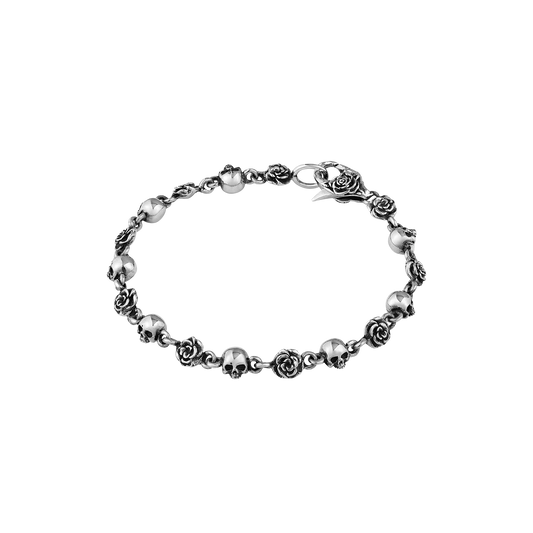
Both stones translate differently into March birthstone jewelry. The cool clarity of aquamarine and the grounded density of bloodstone. Both work across standard jewelry formats, though each suits a different design approach.
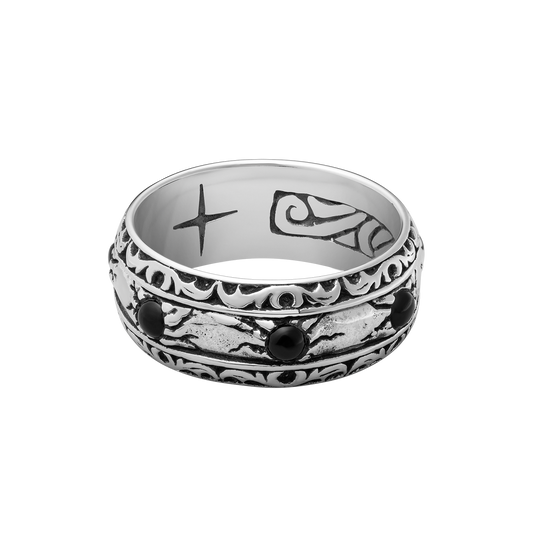
An aquamarine March birthstone necklace or ring work best in open settings that let light move through the stone. Bezel and prong settings in sterling silver allow the colour to perform without the metal competing. Bloodstone is better suited for heavier, more structured settings where the stone's weight registers as intentional. Signet rings work particularly well with bloodstone's flat, opaque face.
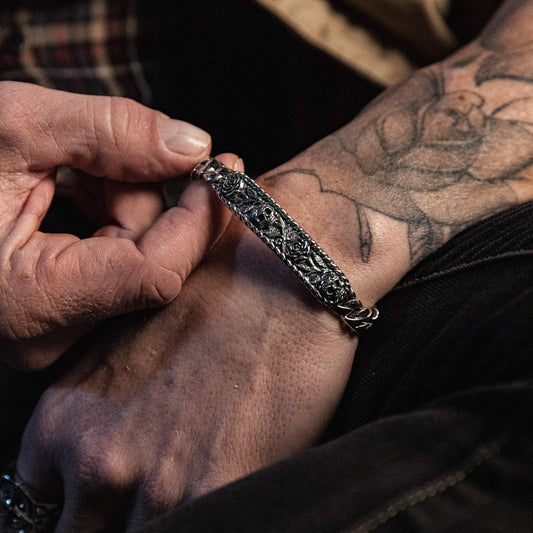
Bloodstone fits better in heavier settings. Rings, signets, or pendants where the stone sits with intention rather than shine. Bloodstone pendants carry more visual weight and suit shorter chains with structural detail. For a March birthstone bracelet, aquamarine reads well in bezel-set link formats. Bloodstone suits heavier cuff or bead formats that match its density.
If you’re considering a March birthstone gift, the choice comes down to the person. Some lean toward clarity. Others toward something more grounded.
March Birthstone by Date of Birth
Both aquamarine and bloodstone carry full validity across the entire month. March 1-31 birthstone traditions assign aquamarine as the contemporary primary and bloodstone as the traditional stone throughout.
|
Dates |
Stone |
Colour Profile |
Symbolic Tone |
|
Mar 1, 6, 11, 16, 21, 26, 31 |
Aquamarine (Deep Blue) |
Saturated Blue |
Clarity & Conviction |
|
Mar 2, 7, 12, 17, 22, 27 |
Aquamarine (Blue-Green) |
Cool Blue-Green |
Composure & Navigation |
|
Mar 3, 8, 13, 18, 23, 28 |
Bloodstone (Deep Green) |
Dark Green, Red Marks |
Endurance & Grounding |
|
Mar 4, 9, 14, 19, 24, 29 |
Bloodstone (Vivid Spot) |
Green, Strong Red |
Courage & Loyalty |
|
Mar 5, 10, 15, 20, 25, 30 |
Pale Aquamarine |
Light Blue, Translucent |
Calm & Foresight |
The march birthstone by date associations above reflect interpretive tradition rather than formal gemological designation. Both stones carry full validity across the entire month..
Ways to Wear Your March Birthstone
Wearing a March birthstone ring places the stone in constant view. It becomes part of how you move through the day. The choice between them often comes down to which quality the wearer needs more: clarity or grounding.
Aquamarine pairs naturally with sterling silver, lighter chain weights, open and minimal settings, and layered pieces where the stone provides colour without adding visual mass. A March birthstone necklace sits closer to the body. Less visible, but more personal.
Bracelets and earrings offer smaller points of detail. They don’t carry the same weight visually, but they build consistency. For a March birthstone ring, consider the stone's weight relative to the band. Aquamarine benefits from lighter proportions. Bloodstone holds against substantial metalwork.
The key is restraint. Both stones work with dark leather, matte metal textures, and understated layering.
Where to Buy or Explore More Birthstones
If you’re looking to explore March birthstone jewelry, focus on materials that hold up over time. Sterling silver and stainless steel offer durability that matches the nature of both aquamarine and bloodstone.
For aquamarine, look for open settings in sterling silver that allow light transmission. For bloodstone, look for structured settings that respect the stone's weight and surface. Both stones are available across a wide quality range. Colour consistency, surface
If you're following the year's stones: February carries amethyst, violet and composed. January brings red garnet, durable and something else. March sits between them with something more. Two stones, two registers, one month that earns the complexity.
Look for pieces where the stone feels integrated into the design, not added as an afterthought. The setting matters as much as the stone itself.
Final Thoughts: Why Aquamarine & Bloodstone Endure as March's Birthstones
March doesn’t settle into one definition, and neither do its stones.
Aquamarine holds clarity. It reflects the part of March that opens, that moves toward something with purpose. Bloodstone holds ground. It reflects the part that stays put when the conditions are still unresolved.
They represent different ways of moving through the same world. One steady. One grounded. Both intentional. Both have lasted thousands of years because they reflect something real about how people move through difficulty. With composure, or with conviction, or with both at the same time.
That’s why the March birthstone continues to hold relevance. Not because it fits a single idea, but because it leaves room for interpretation.